
HUF 500 billion: this is the estimated value of the assets managed within the rather opaque network — comprising companies, private equity funds, as well as asset management firms — organised around the Central Bank’s Pallas Athéné Domus Meriti Foundation (PADME). Within this substantial fortune, public funds amounted up to HUF 407 billion, of which a sum of 200 billion has been lost, according to the State Audit Office. As we reported in a previous article, the bulk of these assets was invested in two large foreign real estate companies. The losses stemmed from a significant drop in the market value of these shares, which are also difficult to sell right now.
The task entrusted to Optima Investment Plc. was to invest these assets in a secure manner while achieving high returns and maintaining liquidity. However, this was not fulfilled, as in 2020 PADME invested these assets into a 20-year bond issued by its subsidiary, Optima. It did so despite the fact that
- such bonds can hardly be considered the safest form of investment,
- while between 2021 and 2023, its yield did not even reach 1 per cent annually (ranging between 0.12% and 0.96%).
It is not irrelevant how much interest the bonds yield, or how much dividend the companies within the network produce, since PADME finances the foundation’s goals from the returns on the managed assets. Between 2021 and 2023, Optima generated a total profit of HUF 4.8 billion, but its affiliates — other companies within the investment network — did not perform nearly as well. In 2021, only one affiliated company paid dividends to Optima, while in 2022-2023, this number was two.
The real severity of the situation became apparent to the public eye only through the recently published ÁSZ report. However, those involved could have been informed of the looming insolvency risk as early as the beginning of last year, if not before, based on signals from Optima, the manager of the foundation’s assets. Later, they concluded that external assistance would be necessary, to the tune of an additional HUF 400 billion capital injection. This “rescue package” would nearly match the amount of public money previously injected into the system, as
- the original HUF 266.4 billion contributed to the foundation by the MNB
- was later supplemented by another HUF 127.5 billion from the Kecskemét-based Neumann János University Foundation. We have already dealt in detail with the eventual fate of this capital injection, as well as the question of responsibility.
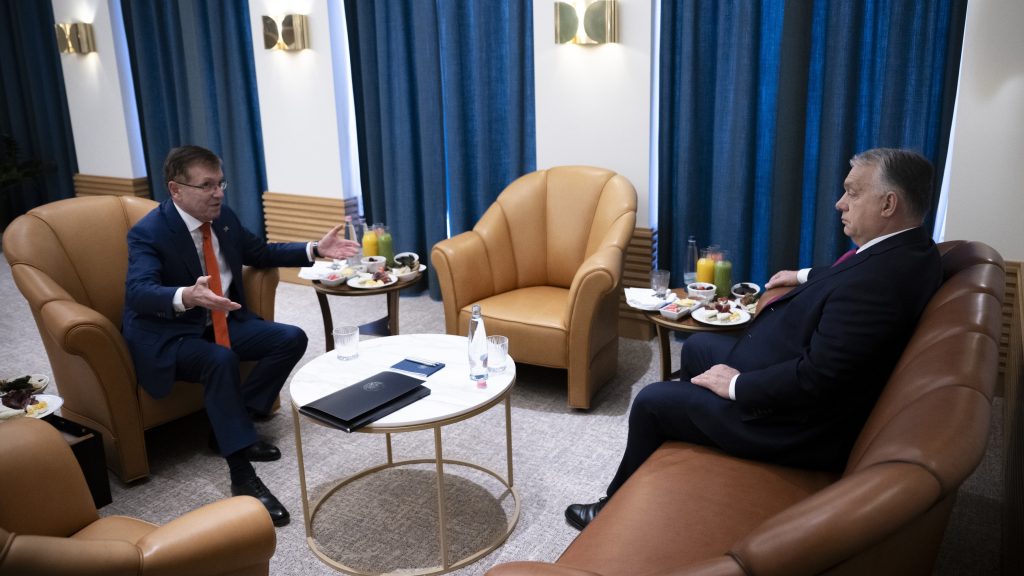
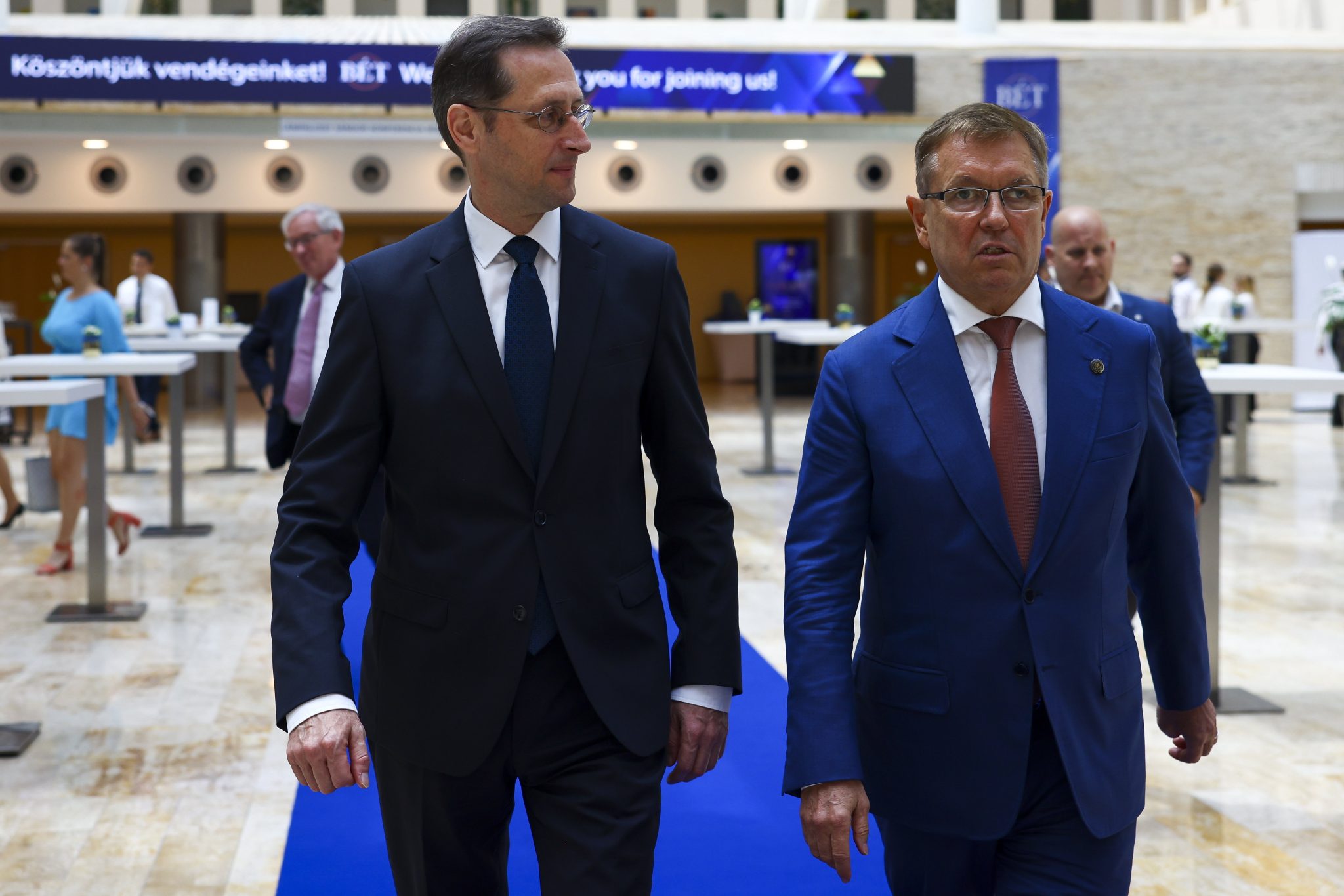
In April last year, PADME’s board of trustees adopted a reorganisation plan, which included selling the shares acquired in the Swiss real estate company, repaying the €170 million loan taken from MBH Bank, as well as repurchasing the bond package worth HUF 127.5 billion subscribed to by the maintainer of Neumann János University. The sale of the shares failed, but in the meantime, Mihály Varga took over at the helm of the Central Bank – within a few days, he replaced the key people of former Governor György Matolcsy, both within the top echelons of PADME and across the extensive asset management network. The latter, however, went through a reorganisation project involving a private equity fund directly before Matolcsy’s departure.
Not illegal, just unnecessary
While there is no explicit prohibition against the establishment of foundations in the Central Bank Act, it is difficult to find a logical explanation for their creation on MNB’s part. There would be nothing problematic with the National Bank supporting the education of financial professionals with a few hundred million forints, as this would not require significant resources and could even support the performance of its duties in the long term – noted former MNB Governor András Simor, referring to the fact that the foundations of the Central Bank were established, among other things, to facilitate the professional training of experts in finance and economics. The tasks of the MNB are defined by the Central Bank Act, according to which its primary activity is the creation and protection of price and financial stability, so no activity that significantly diverts resources from this is justified. The title of the annual audits conducted by the State Audit Office, however, is “Audit of the MNB and its activities not belonging to its core tasks”, implying that there are indeed activities which do not belong to the aforementioned core mission. Still, the emphasis is on that maintaining additional activities of a significant scale is not justified – Simor explained to our question.
The MNB should have supervised its Governor’s inner circle
Yet the original HUF 266 billion in foundation assets is a significant amount, around the management of which a giant bubble was inflated involving a multitude of companies and collaborators. On the corporate structure chart attached by the State Audit Office to its PADME audit report, dozens of companies, asset managers, funds, and private equity funds can be found. Even if there is substantial overlap in their leadership, maintaining the executives and staff of these organisations could have entailed serious and unnecessary expenses. The State Audit Office highlighted the personal interconnections — namely, that Optima’s senior officials also held positions in other entities within the investment structure, which led to situations where
The report did not address whether this network is compatible with the MNB’s supervisory role, as the Central Bank is supposed to be not only the donor of the foundation’s assets but also the supervisor of financial organisations. (In 2013, the MNB absorbed the formerly independent financial supervisory authority.) It is the central bank that issues their licences, checks whether they operate lawfully, and even the issuance of investment units cannot take place without the MNB’s authorisation. In other words, the Central Bank, as the supervisory authority, was supposed to be the one overseeing the jungle of its own foundation’s asset management activities, as well as its financial products, raising the question of conflict of interest.
There are certain elements that slip through the net of supervision — for example, in the case of private equity funds under EUR 100 million, the obligation is only to report, no detailed inspection of their operations is involved – noted Miklós Ligeti, legal director of Transparency International.
He added that the significant loss of assets should have been noticed along with the deception. Not to mention the fact that the assets in the books of Optima Investment Plc. were not recorded at market value. According to the State Audit Office report, a “correction” would have been the right thing to do, seeing the necessity of a 100-billion-HUF write-down.
This matter concerned only a handful of actors — until it emerged that Optima could not repay the bonds maturing in 2025–26 to their subscriber, Neumann János University. From that point on, the issue of where this HUF 127.5 billion in public funds had gone became a question affecting every taxpayer.
Is György Matolcsy being spared?
Regarding the missing billions and the question of responsibility, András Simor estimated that it would take several dozen people working for months to uncover exactly who was responsible and for what concerning the decisions made within the network woven around the foundation’s assets.
If we look at the rules applying to the various levels, the supervisory board of the MNB is, in principle, not responsible, as the Central Bank’s supervisory body has no jurisdiction over areas outside of the central bank’s accounts. The case of the foundations came up when the central bank’s HUF 2,000 billion loss had surfaced, and there were suggestions that assets held in foundations and subsidiaries should be involved in the loss management or at least be subjected to stricter supervision. Accordingly, a legal amendment was soon drafted to extend the powers of the supervisory board, but the proposal was ultimately withdrawn — Simor recalled.
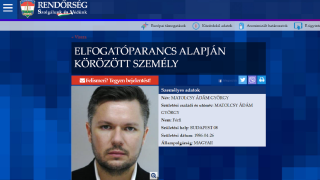
Everyone in the network is responsible, except for the supervisory board chaired by Ferenc Papcsák — formerly the Fidesz government’s commissioner for accountability, he has recently made headlines again for involvement in a profit-extracting intermediary company lodging itself between Uzsoki Hospital and its private patients. However, the extent of each person’s accountability is a trickier question. According to the former MNB chief, it is not easy to establish György Matolcsy’s responsibility regarding the foundations, as the former Governor could defend himself by claiming he only created the foundation, transferred the assets, and appointed the board of trustees. From then on, he had no formal connection to the assets, no official influence on asset-related decisions — at most, one could argue he had poor judgement when appointing trustees. This argument may even be defensible unless there is a document proving that the MNB’s leadership or anyone else issued instructions regarding the management of the assets. However, this possibility cannot be excluded — according to Válasz Online, the former Governor’s son, Ádám Matolcsy, allegedly directed and organised the Ultima deals and the company network surrounding them through emails under the pseudonym Petra Kovács.
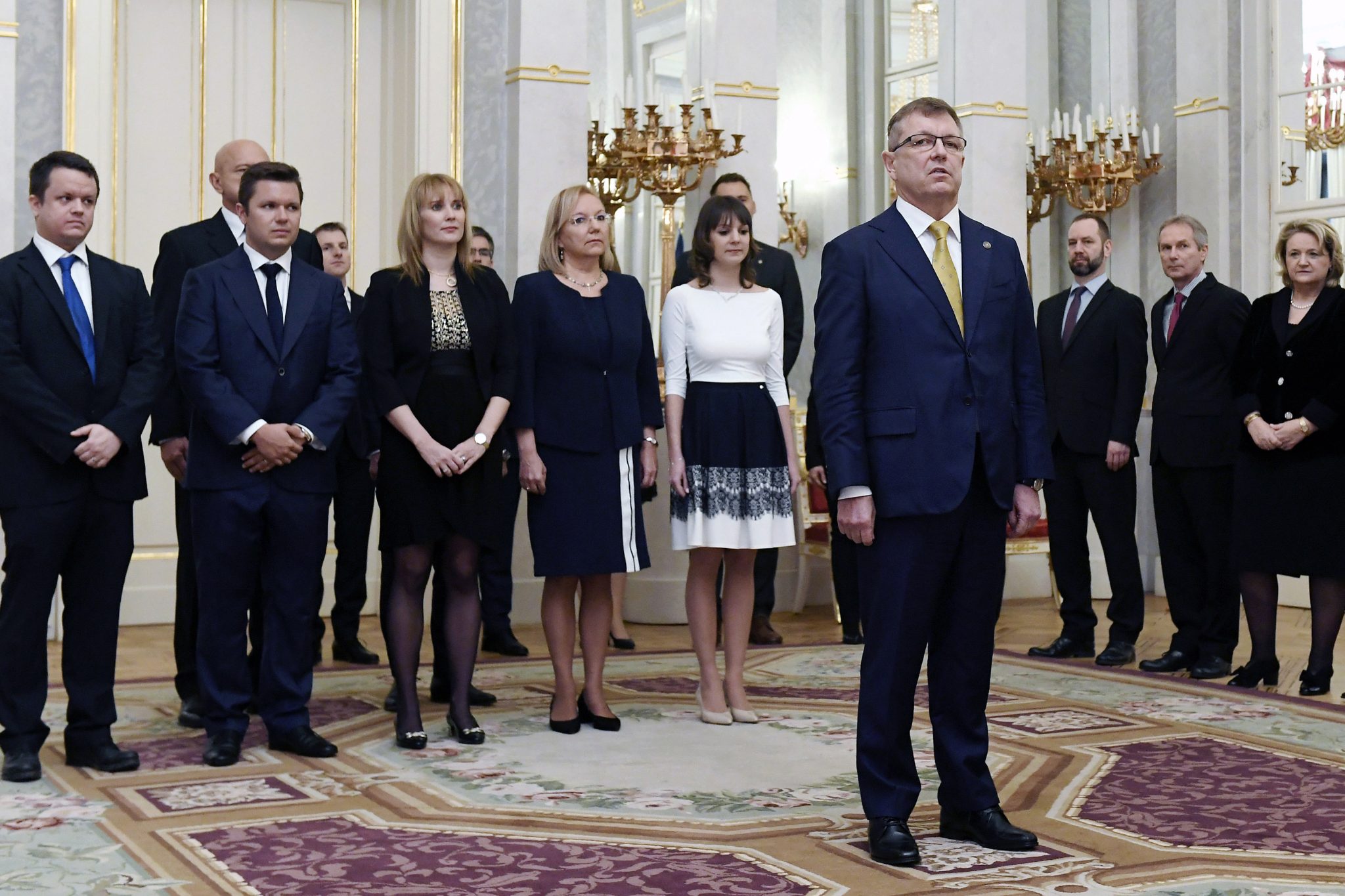
It does seem a little as if György Matolcsy is being spared in the matter – noted András Simor in connection with MNB-Real Estate Ltd. The management of real estate owned by the Central Bank is Matolcsy’s responsibility, yet no criminal complaint has been filed in this case — unlike with the other two State Audit Office reports on PADME and the Neumann János University Foundation. The auditors merely found that there had been “no frugality”:
This is a restrained description of the process that unfolded during the Matolcsy era: compared to 2012, the MNB’s operating costs doubled in real terms. For example, the Central Bank’s headquarters — which was already in excellent condition — was renovated at a cost of around HUF 4 million per square metre, Simor noted.
The auditors also identified a conflict of interest in connection with the MNB’s real estate renovations. There were cases in which the call for tenders, the evaluation, and the selection of the contractor were all the responsibility of Somlai Invest Ltd., which then selected Raw Development Ltd. as the contractor — even though both companies are the business interests of Bálint Somlai, a member of Ádám Matolcsy’s friend circle. The State Audit Office merely remarked that this likely did not benefit competition or pricing.
Presumably the same applies to real estate transactions involving GTC which saw the appearance of investment funds managed by Quartz Investment Fund Management Plc. — run by István Száraz, also part of the younger Matolcsy’s circle of friends — or their affiliated companies. The property giant with a Polish background represented a major prize for the MNB’s business circle; reviewing its project invoices, the State Audit Office found that
Moreover, within just a few years, GTC paid out more than HUF 40 billion for properties belonging to the Matolcsy–Száraz network of interests.
Curators may end up taking the fall
Although it’s unlikely that the members appointed to PADME’s board of trustees themselves masterminded the asset management network, on paper this is the body that holds primary responsibility — and for monthly salaries in the millions, such “risk” is to be expected.
The right to use and manage the foundation’s assets lies with the board of trustees; its task is to ensure the foundation operates in line with its goals and that assets are handled responsibly. The curators are responsible for making informed decisions based on solid and accurate information. During the period under review, 2021–2023, the board made its decisions in writing based on preparatory materials from Optima. However, according to the ÁSZ report, there was no sign of a responsible or controlled decision-making mechanism: it happened once that the board made a decision on a hundred-billion-forint item within just a few hours, without detailed underlying calculations. For instance, at the board meeting on 3 April 2020, during the discussion regarding the purchase of shares in the Polish real estate company GTC, the chairman of the board gave the curators just four and a half hours to make a decision.
Optima carried out the legal and financial due diligence using its own advisors (Dentons Réczicza Law Firm, Impact Advisory Ltd.); the board of trustees did not receive an independent advisory opinion. Responsible financial management requires decisions to be based on sufficient, reliable, and accurate information — but this was not the case here. And this was about nothing less than the foundation’s largest investment to date: a nearly 60% stake in GTC. Tellingly, the value of the transaction was not even included in the board resolution — even though it was a HUF 253 billion deal.
In recent weeks, continuous attempts have been made to reach former members of the PADME board of trustees, intending to ask how they assess their roles in retrospect. However, even those who had answered the phone to begin with declined to comment.
Board chairman Attila Norbert Csizmadia and Imre Réfy were unreachable, not responding to SMS messages or emails, either. Csaba Lentner — a former MIÉP MP who once said that Matolcsy was becoming worthy of a statue erected in his honour (and was also his PhD supervisor) — said only that he had expressed disapproval of the events surrounding the foundation as early as 2023 and later resigned from his post. However, he refused to provide the specific reasons. According to court records, Lentner’s right of representation was terminated in June 2024 — by which point most of the criticised decisions had already been made.
The former state secretary, László Bogár — known in right-wing media for his conspiracy theories and unconventional ideas — also declined to comment. He said that both the previous and current governors of the Hungarian National Bank were his students, adding
this is their match; they’ll play it out among themselves.
Bogár remained steadfast even when we pointed out that due to the hundreds of billions at stake, the manner in which the board of trustees had been conducting its meetings is a matter of public interest. As he explained, public interest does not exist, in his view topics are generated exclusively by the press.
According to the foundation’s regulations, the director also bears responsibility, as they must report to the board of trustees regarding any investment activities and are also obligated to propose the correction or termination of underperforming or poor-quality investments, as well as flagging economically unjustified ones. This position was held for an extended period by Tamás Bánkuty, a trusted associate of György Matolcsy, who made the switch to the MNB from the Ministry of National Economy.
In January, this role was taken over by György Stofa, also considered part of the Matolcsy circle, who, in addition to directing the foundation, also became CEO of Optima and four other companies in the asset management network by the end of 2024.
The foundation’s supervisory board also had a reporting duty towards the founder, i.e. the MNB. The founding charter stipulates that they must report at least once a year, or more frequently as necessary, on their findings. However, the State Audit Office report states that the supervisory board’s reports failed to provide adequate information and took no action against identified “economic anomalies.” In fact, ÁSZ had already warned Matolcsy in March 2024 that the reports sent to the MNB were inadequate and did not reflect the real value or condition of the portfolio. Matolcsy ordered internal investigations in May, which confirmed these concerns — shortly thereafter, he replaced the foundation’s board of trustees.
Organised crime? Estimated damage: 200–300 billion forints
Responsibility may also extend to members of the supervisory boards and directors of the foundation and the companies and fund managers involved — although proving whether specific transactions were conducted at market value will not be easy. According to ÁSZ, on the other hand, the Optima Group paid an unjustified premium when purchasing a GTC share package, agreeing to a price 31% above the average market rate at the time, resulting in an overpayment of nearly 60 billion forints.
As far as accountability is concerned: until 2019, before the six foundations merged, determining responsibility would have been easier, as the boards of trustees and supervisory boards of the foundations included Matolcsy’s own subordinates. Therefore, not even the complex corporate network could have obscured where actual control was concentrated, since the MNB leadership effectively retained authority over the assets via handpicked board members. However, after the merger and the emergence of PADME, the chain of decision-making grew harder to trace. This is why it’s potentially significant whether authorities investigate the letters allegedly written under the alias “Petra Kovács” — believed to be penned by Ádám Matolcsy, György’s son — and other interesting connections.
Ligeti argues that in case the organised crime structure can be proven, then the network’s members acted in line with a pre-agreed choreography, simply rubber-stamping decisions. Everyone did as instructed: signing papers, buying, selling, issuing shares and so on. Some of the organisations involved may have existed only on paper, designed purely to further convolute the picture. But in some cases, it’s relatively simple to determine whether a company was real or just a façade — for example, if it had only one source of income and no employees, chances are it’s the latter.
According to the legal director of Transparency International – the organisation filed a criminal complaint for embezzlement and suggested the accountability of state authorities – the investigation of the case, as long as it will actually be carried out, will most closely resemble a cartel investigation. What’s already clear, however, is that the members of the foundation’s board of trustees, as well as executives of the investment network organised around the foundation, cannot claim ignorance. The structure reveals numerous overlaps and entanglements: according to the State Audit Office’s report, members on Optima Investment Ltd.’s board of directors also held executive positions in 12 other entities involved in the network.
Furthermore, the report raises concerns about the responsibility of the auditing firm as well. The firm BDO Hungary Auditing Ltd. was familiar with the entire corporate and investment structure — they were responsible for auditing PADME, Optima Investment Ltd., Optima Fund Management, the private equity funds, Alpine Holding Ltd., as well as GTC Holding Ltd. — yet failed to flag any risks.
As a result, the authority requested the Ministry of Finance to determine the auditor’s liability, and the quality control review resulted in
Article co-authored by József Spirk.